
Understanding Human Behavior – a Q&A with Catapult Insights and expert, former Amazon researcher Debbie Hovies
Much goes into developing business strategies, and a key input is often understanding the human audiences that an organization serves, which may include consumers, professionals, and tradespeople among others. Identifying valuable insights and effectively communicating them to enable organizations to take informed action requires considerable expertise.
Jill Miller recently organized a roundtable discussion with human insights experts Justin Sutton and Debbie Hovies to provide an in-depth exploration of the research that informs the strategy development of leading companies today.
Jill: Thank you for sitting down to chat with us today, Debbie! We’ve worked alongside you at multiple organizations, but this is your first time being featured in the Catapult Insights blog series. Can you share a bit about your experience?
Debbie: Thank you! I’m excited to be part of the Catapult Insights blog. It’s such a great full-circle moment—starting out as colleagues and now getting to work together as your client.
My love of research began in grad school, where I had the rare opportunity to study language and communication with chimpanzees. That experience taught me early on the value of high standards and the importance of producing findings that are both meaningful and defensible.
I didn’t set out to work in market research, but I knew I wanted to stay in a research-driven field. I joined a growing firm where I helped build its first UX team, then moved into quantitative work, which is where I really found my stride. Over time, I became known for research rigor, strategic thinking, and the ability to translate complex data into clear, actionable insights that align teams and inform key business decisions.
Eventually, I moved to the client side with Amazon so I could be closer to the decisions my work was influencing. That’s been the most rewarding part—seeing how strong research can truly shape customer experience, brand strategy, and product development.
Jill: Justin, you’ve been studying human behavior most of your career. What was your favorite project, and what made it so memorable for you?
Justin: That’s a tough one because there have been so many rewarding projects, but one that stands out was a multi-phase study we did on financial decision-making among first-time homebuyers. What made it memorable wasn’t just the complexity of the topic, but the emotional vulnerability people shared. We weren’t just talking about money. We were talking about trust, fear, identity, and aspirations.
What stuck with me was how often people made decisions that seemed irrational on the surface but made perfect sense once we understood the emotional context. That project reminded me that behind every data point is a person trying to make sense of their world. And when we take the time to listen deeply, we can uncover insights that not only inform strategy but also build empathy across teams.
Jill: What does no one tell you about studying human behavior that you’ve learned through your work?
Debbie: One of the most fascinating things I’ve learned is how consistent human behavior can be, even across very different industries, categories, or business models. Whether someone is forming loyalty to a brand, navigating a major life transition, adopting emerging technology, or simply shopping for snacks, the emotional drivers and decision-making patterns often follow familiar themes.
At the same time, every person brings their own context, values, and experiences, so no two behaviors are exactly alike. The challenge is recognizing both the variability and the patterns and knowing when to focus on individual experiences versus when to generalize across groups. Balance is key for organizations to make smarter, more customer-centered decisions.
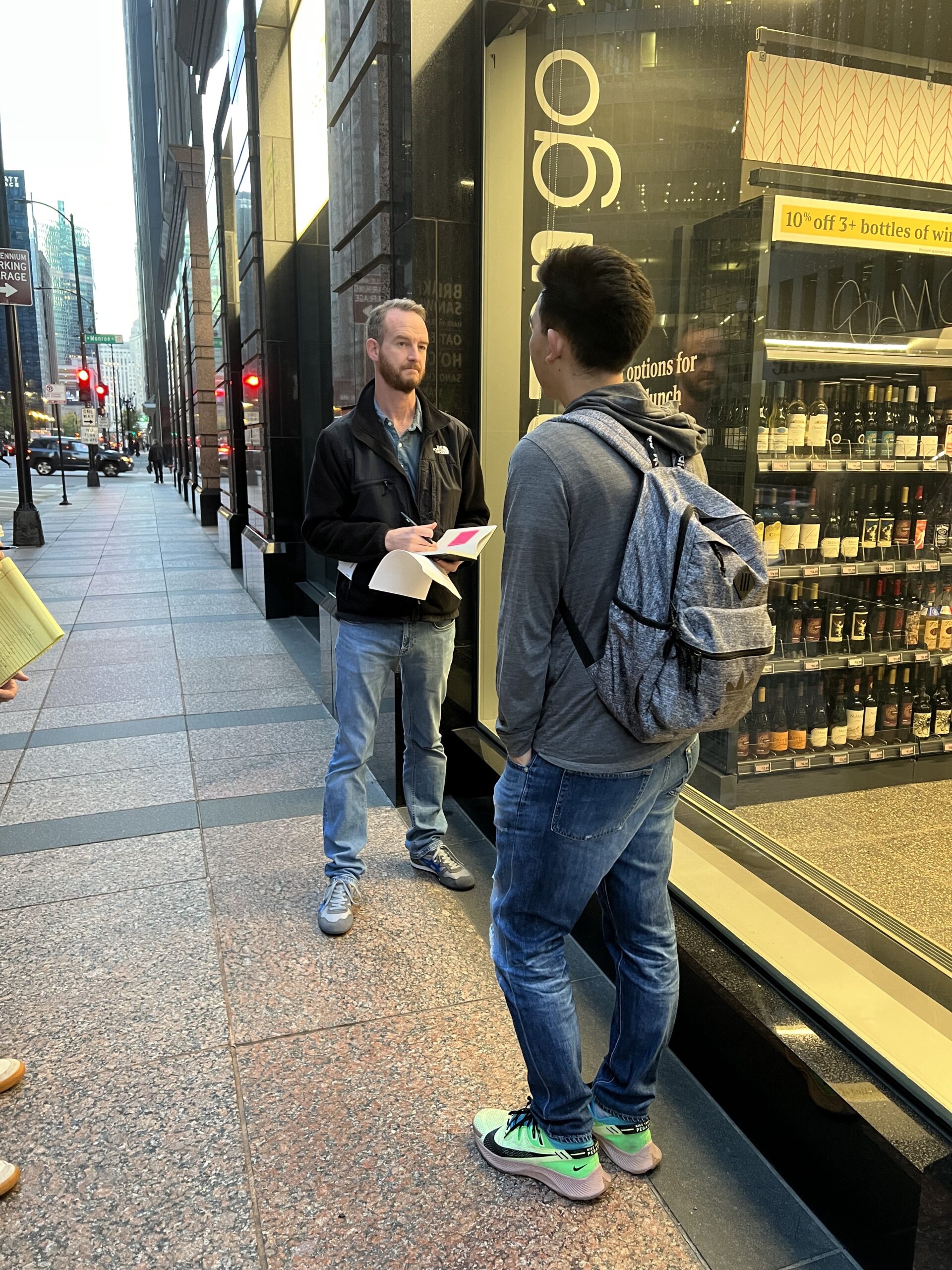
Justin: Debbie is very right about this, as I’ve found much overlap between my tech, CPG, and auto work. One thing that doesn’t get talked about enough is how much human behavior is shaped by context, be it physical, emotional, or social. We often look for patterns across people, but I’ve found that the same person can behave in wildly different ways depending on the environment they’re in or the mindset they bring to a moment.
That’s why I’ve always been drawn to methods that let us observe behavior in-situ. Whether it’s in a store, at home, or in a digital space, it’s not just about what people say they do, but what they actually do when the stakes are real. And often, the most revealing insights come from the small, unguarded moments. You look for the glance, the hesitation, the workaround. Those are the clues that help us design better experiences.
Jill: In the shopper insights space you’ve used a range of in-store and online approaches—including ethnographies, intercept interviews, shopalongs, customer surveys, and other qualitative and quantitative methods. Which approach has yielded the most unexpected insights?
Justin: The most unexpected insights usually come when we stop trying to control the environment too tightly. Some of my favorite moments have come from open-ended ethnographies where we let people lead the way. When you give people space to show you what matters to them, they often reveal things you never would’ve thought to ask.
That said, I’m a big believer in mixed methods. Quant gives you the scale, but qual gives you the soul. When we can layer those together (say, a behavioral segmentation followed by in-depth interviews), we start to see not just what people are doing, but what it means to them. That’s where the magic happens.
Debbie: Rather than “unexpected,” I would say the most powerful insights have come from moments Justin mentioned where multiple methods come together to reveal both the what and the why. A survey might surface a surprising trend, but it is often the qualitative work—ethnographies, interviews, open-ended responses—that gives that data meaning and emotional weight.
Some of the insights that resonated most with stakeholders were not necessarily the ones with the largest statistical differences. They were the ones that felt the most meaningful. It is easy to lose sight of the real human experience behind the data, but when you bring in a direct quote, a photo, or a moment from a shopalong, it makes the numbers harder to ignore.
Jill: People can be rather unpredictable at times. What are some of the most unexpected things you’ve learned about human behavior?
Justin: One of the most surprising things I’ve learned is how often people contradict themselves and how comfortable they are doing it. Someone might say they value sustainability, but still choose convenience. Or they’ll describe themselves as budget-conscious, then splurge on something that “just felt right.”
At first, it can seem like noise or inconsistency. But over time, I’ve come to see it as a feature, not a bug. Human behavior isn’t always linear or logical. It’s layered, emotional, and context-dependent. The unexpected moments are often where the richest insights live. They challenge our assumptions and force us to dig deeper, which is where the real value of behavioral research comes in.
Jill: You’ve both explored the emotional and practical drivers behind peoples’ decisions. How do those two angles come together when forming meaningful insights?
Debbie: The most meaningful insights usually come from understanding both what people are doing and why they are doing it. Practical drivers show the functional side of decision making, such as price, convenience, and availability. Emotional drivers uncover the underlying motivations like trust, identity, or a sense of control.
Just like combining qualitative and quantitative methods gives you a more complete view, bringing together emotional and practical drivers creates a clearer and more useful understanding of customer behavior. One without the other often leaves the picture incomplete.
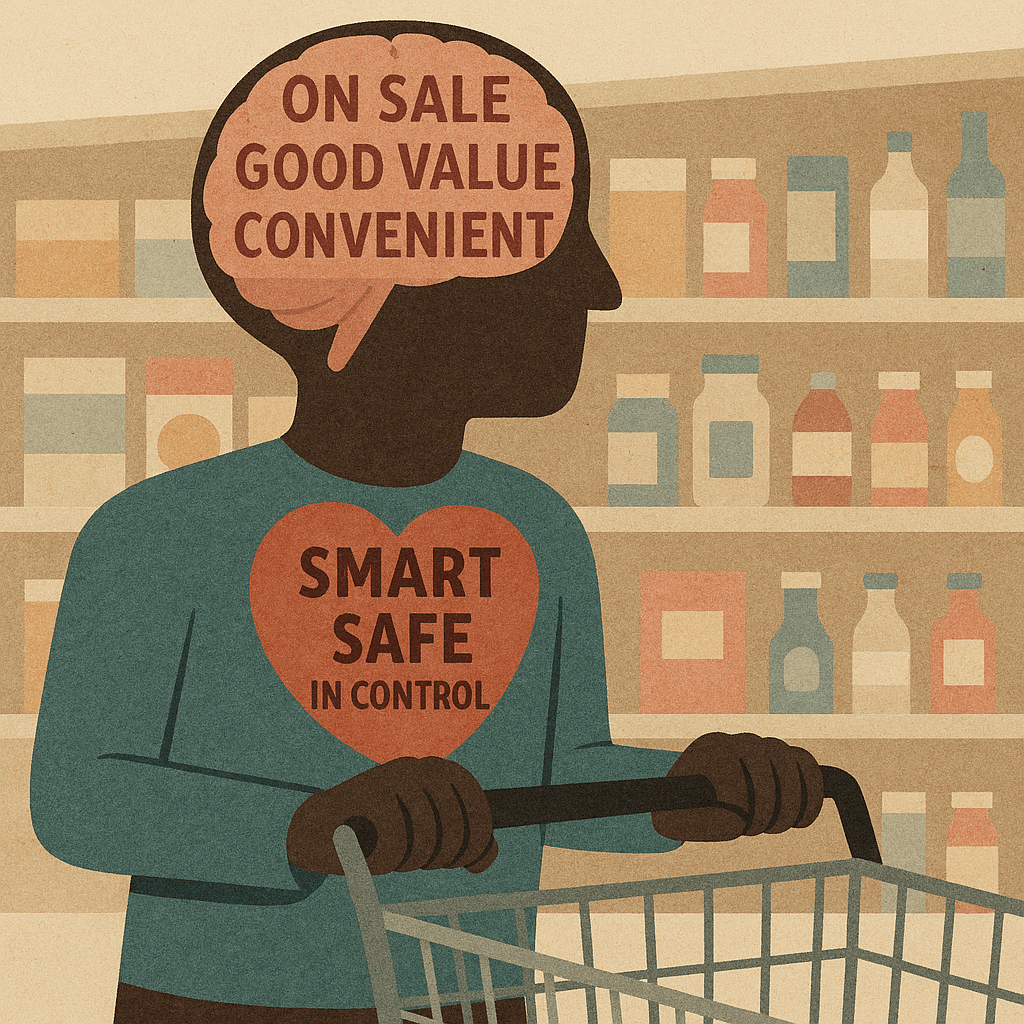
Justin: Very true! I think of emotional and practical drivers as two sides of the same coin. The practical gets you in the door, like price, convenience, availability. But the emotional stuff is what keeps you there. It’s what builds loyalty, trust, and advocacy.
What’s interesting is how often the emotional drivers are hidden beneath the surface. People might say they chose a product because it was on sale, but dig a little deeper and you find it made them feel smart, or safe, or in control. That’s why we always push to understand not just the “what” but the “why beneath the why.” When you can articulate both, you give teams something they can actually act on.
Jill: It seems we agree that human beings are complex and multi-dimensional; at times they may act rationally and predictably, while at other moments their behavior can be driven by emotion and may appear unpredictable. Without considering the holistic picture, including situational and environmental factors, any insights obtained risk being incomplete or misinterpreted. I appreciate how both of you approach your work from diverse perspectives to thoroughly understand human behavior, integrating observations of what individuals say, think, and do in order to construct a comprehensive understanding
We’ll take a break here and return for Part 2 of our Q&A soon. Our next topics will focus on what happens after insights are collected and you shift into analysis of implications and answering the most important business question: “Now what?”.
Drop us a note at hello@catapultinsights.com if you want to learn more about our human behavioral research.
Jill Miller
CO-FOUNDER
CATAPULT INSIGHTS